Posts

The Lee Oswald Paradox: a Hero or a Pathetic Fool?

In Libra, we are given lots of information about young Lee in his journey to become the notorious Lee Havey Oswald, and in the mix of details and self-accounts, we can paint two contradicting pictures of him simultaneously. On the one hand, he is a resilient and determined aspiring revolutionary who rises from difficulty to answer his true calling as a historic figure. On the other hand, he is a foolish kid pursuing an idealized picture of historic fame . No matter how paradoxical, these two faces are inseparably embedded in Lee’s core identity, demanding a deeper review of how this contradiction came to be.  Let’s start with his heroic side. What impressed me the most about Lee was how he raised himself up from the challenges of his upbringing. We learn that, as a teen, he struggled to fit in with his peers and felt displaced wherever his family moved to; he lacked a fatherly figure and was generally disconnected from his mother and siblings. But rather than letting all this hards...
Rufus and Thor

Rufus and Thor are both characters who, despite their initial interest in improving the situation of the colored members of their society, end up betraying this mission and submitting to the white supremacist narrative of their time.  In the beginning, they are inspired by a black figure–Dana and Berbelang–to become attracted to the cause of empowering colored people. This partnership between a white and a black character is unusual for their time and is a big personal sacrifice for both individuals.  It’s important to note the challenge of Dana and Berbelang’s position here: these two characters are both outliers in their colored community (the enslaved people at the Weylin plantation and the Mutafikah) because they believe that a sympathetic white person can be instrumental to promoting the best interests of their community. Despite the warnings of other people in their community, Dana and Berbelang develop a relationship with Rufus and Thor and put their trust in them, even...

Parallelism between Jes Grew and the LGBTQ community

Image
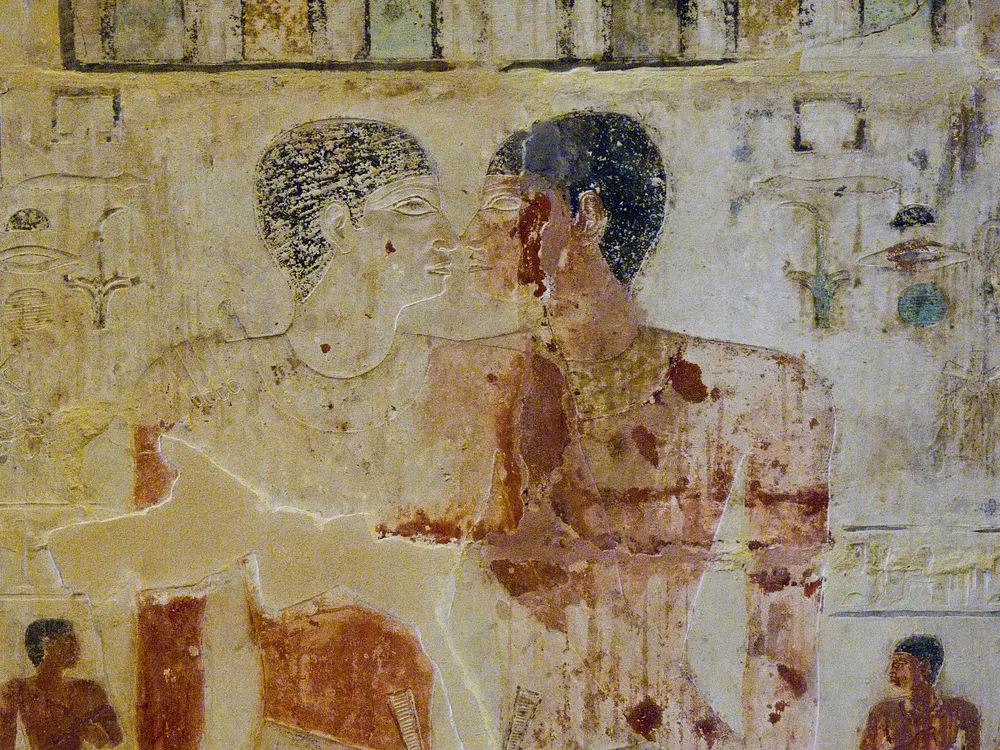
The dynamic between the Jes Grew community and the Wallflower order in Mumbo Jumbo offers a narrative through which we can understand contemporary cultural issues. The battle for power between marginalized groups and the traditionalist authority is echoed across various social issues, among them the fight for LGBT rights. In many ways, the LGBTQ community and history share deep similarities with Jes Grew. Like Jes Grew, the legacy of LGBTQ people traces all the way back to ancient history, in various parts of the globe. In ancient Mesopotamia, same-sex relationships were very common, so much so that they were considered equal to any other relationships. Similarly, in ancient Greece and Egypt, there was little to no stigma around same-sex couples, except in specific cases in which the social status of the lovers differed or a man was deemed to "play the part of the woman" during sex. Back then, queer relationships were so normalized in mainstream society that no words meaning ...

Why are women in Ragtime attracted by girls?

Ragtime  features women who find themselves strongly drawn to other, often younger, female characters–Mother to Sarah, Evelyn to the Little Girl, and Emma Goldman to Evelyn. This drives them to help these girls to the best of their capacity, which comes in various forms: Mother taking in Sarah and her son, Evelyn mothering the Little Girl, Emma taking off Evelyn’s corset, and opening her eyes to freedom. The level of love and care that these women express exceeds reactions to simple pity, especially when considering the intensity of emotions and the personal sacrifices that encompass their actions.  This got me interested in answering the why: what would have led these women to develop such a strong bond with the girls, who were complete strangers to them until they first met? Perhaps it is companionship. In all three cases, the women are revealed to share similarities with the girl that they are attracted to. For instance, Evelyn and the Little Girl are both isolated and lone...

I am totally lost.

[I didn't write in response to a specific prompt]  My parents have always wanted me to have a smooth life. They want me to have a direction, to go the safe path–of attending a good university, then advancing to some high-paying career where I would be respected and would earn myself enough financial freedom to enjoy my life. At least that’s what I’m speculating from all the times that they–especially my dad–have preached the importance of my university’s name value and finding a major that will give “stability” in my life. Well, my parents in general aren’t very pushy in terms of academics, but when I bring up the subject of college admissions, discussing how getting into a top college isn’t as important as it used to be, or that I’m interested in applying to a liberal arts college to study sociology and environmental studies, they catch on quick with their own input, basically doing everything they can to stir me clear toward what they think is the safe path.  Honestly, maybe...

College admissions....ughhh

What could you live without?  I hate the words “interesting”, “passionate”, and “intrigued”. I’ve used them so much in my college essays that they all feel so outdated, debased, almost fake.  I think I’m going into a curiosity crisis–I don’t feel interested in things. If you define interest as just the small spark of attraction you feel toward something, then I guess I do have some interest. But the magnitude and the duration of my curiosity have weirdly dropped. Though I've retained my enjoyment during classes, it’s been months since I have felt fully immersed in learning or chasing down a series of questions outside of school. However, this is hardly surprising. Since August of 2023, I have been primarily working on my college essays outside of school and classes. I put off personal projects or self-studying because I almost felt “guilty” divesting time away from working toward a college admission decision that could significantly impact the next four years of my life. Eve...

Why are you so short?

[I didn't write in response to a specific prompt] (Content warning: this blog is about an eating disorder. If you're not ready for something emotionally intense, don't read.)  “Why are you so short?" My extended family would probe. I hate that question. “What happened?”. My parents are on the shorter side, but they are both taller than me–and so are everyone else in our family, including my younger cousins. Everyone knew something must have happened. But no one, except me and my parents, knows what exactly happened in those haunting 10-12 months that (probably) led to my unusually short height. Even now, years after the “incident”, we avoid talking about it like the plague. It was mid-6th grade. I would call myself a little chubby but not in any way that would concern my health and make any weight-loss efforts necessary. But to that naive kid whose friends’ words probably had as much impact as those of a doctor, the comment “Why are you so fat?” had the weight of a dea...

Four-Leaved Clovers

What hobbies have been passed down from your family?  When I was six, I noticed my dad crouching over a patch of grass. Was he smoking? No, because he didn’t move away like he would when I approached him mid-smoke. I looked at his hand: a four-leaved clover. Peering at the green patch, I saw tons of clovers–most of them three-leaved–and realized he was searching for the special lucky charms. Before I knew it, I was squatting next to him, passionately partaking in the impromptu scavenger hunt. Soon after, it became a tradition of me and my dad to hunt for four-leaved clover (FLC) every weekend. Together, we ventured through every corner of the green space in our apartment complex like partners on a mission. I loved spending time with Dad. My entire life, his presence had meant stability and calm–he reassured me and stayed with me whenever I was terrified; he did everything patiently and methodically; he never scolded, but spoke from genuine love. Picking clovers next to him, I felt ...

Passion vs Grit

 What object tells the story of your life?  In the first four years of my music life, I never stuck to an instrument and easily gave up when things got too difficult or when I suddenly lost interest. At age 7, I quit the piano, just as I started learning how to play octaves. Struggling to stretch my short fingers across the keyboard one day, I exploded with frustration and called it the end of my piano career. A year later, I quit the violin for a similar reason--as I complained to my parents, my shoulders hurt too much. As a kid, I seriously lacked grit and consistency. Most of my pursuits rose and fell in a cycle: at first, I would get extremely passionate and work in bursts of intense enthusiasm, but once that initial flame settled, I would move on to the next thing that captivated me. When I started my third instrument, cello, in 5th grade, I was on fire: I was in love with the deep, rich sound of the instrument and spent hours playing it every day, sometimes without break...

My mom.

  Have you ever felt embarrassed by someone that you love? (adapted from prompt 1) (Psssst I would love feedback on (1) how to make this shorter, (2) making this more cohesive/centered around a certain theme or lesson, (3) ways I could further explore different perspectives/make this essay more comprehensive) Growing up, I often compared my mom to other moms and felt embarrassed by all the ways that she seemed to be “lacking”. When we lived in our apartment in Korea, I spent much of my time in my friend’s home directly above ours, partly to hang out with her but largely because her mom, Ms. Eun, was my tutor.  As a young girl just opening her eyes to aesthetics through seeing celebrities on TV and reading interior decor magazines, entering Ms. Eun’s home reminded me of what I admired about her. There was a certain decorativeness and formality to the manner in which she neatly organized the slippers in the entry-way to a sliding door that led to the living room, how her sharpl...

Crying at a Bibimbap Restaurant

Have you ever felt embarrassed by the things that you used to like?  (For those reading this: I know this is super long; I'm working on making this shorter and would appreciate comments on that matter) I used to (and still do) love eating meat. As a child, I necessitated it so much that I literally wouldn’t eat anything unless there was meat on the table. When I was around six or seven, my parents, my aunt, my cousins, and I went to a bibimbap restaurant. Traditionally, bibimbap comes with veggies, rice, fried egg, and red chili paste. Unfortunately, the bulgogi bibimbap (which includes sweet marinated beef as an additional topping) was out of stock. I refused to order anything.  While everyone else was getting started on their steaming bowls, I was hungry, didn’t see meat anywhere, and was about to cry. Eventually, a streak of tears trickled down my face, and when someone called this out, I exploded into tears.  As usual, my aunt reassured me and called over the manager....

Toxic Pressure in Sag Harbor

Although being aware of the history of those who came before you and the sacrifices that they made for their descendants can be empowering and inspiring, being expected to live up to these legacies can feel overwhelming and even suffocating to the younger generation, especially when the expectation is forced upon them. Sag Harbor shows a great example of how these expectations can have a toxic effect on the descendants of self-made pioneers.  Benji and Regi are surrounded by adults who expect them to always acknowledge their gratitude for their predecessors (i.e. Their settlers of Sag Harbor, their parents, and leaders of the Black Liberation movement). People tell them how privileged they are to be given what they have, which their parents had to work hard to earn as African Americans. Up to this point, it’s understandable why the adults are constantly reminding this lesson to Benji and Reggie: they want to encourage them to not take things for granted and work hard so that they c...

The world never stops unmaking what the world never stops making

 In "January Man", Jason states the following as he tries to grapple with the changes happening in his family after his parents' divorce: “What’s left of Tom Yew’s Suzuki’s being picked apart to repair other Suzukis. The world won’t let things be. It’s always injecting endings into beginnings…The world never stops unmaking what the world never stops making” (285). Although this quote is originally meant to help process his parents' relationship and the family breaking apart, the idea of the world being a dynamic body of things constantly emerging and breaking apart rings true for many other aspects of this book.  One obvious example is the idea of departing from one place to arrive at another: Jason's farewell with Black Swan Green marks his beginning in a new community, like how Julia moving away from her family initiates her new journey at Edinburgh. The physical act of moving is similar to the encounter of a new challenge after overcoming another challenge, whi...

Bruce is one of the worst father characters I've read about.

He yells and inflicts threats of violence on his children for breaking an ornament in his house or not properly putting up a Christmas tree. He gets into violent arguments with his wife for coming home late. He rarely expresses any form of love or attachment to his family. Honestly, he hardly acts like a father at all. Throughout the book, we learn about Bruce's past, which allowed us to piece together what may have caused him to be so absent from his family. Here's my take on it. Basically, Bruce's physical life was a socially-acceptable version of a life that aligns with his true interests. Decorating his house was a way of encoding and expressing his femininity. His love letters to his wife (girlfriend at the time) were reenactments of quotes/personalities of Fitzerald, who he was obsessed with. Further, his job as an English teacher gave him a formal justification for engaging with his favorite books. Meanwhile, the personal relationships that came along with his ...

What awards and scholarships don't protect you from: a mental breakdown

One of the most unique aspects of The   Bell Jar  is that it provides a detailed description of the process that Esther goes through as she "breaks down" from her state as a high-achieving, promising next-generation poet to a person who makes multiple attempts of suicide and later ends up in a mental health facility. Although Esther's story sounds like a very extreme case of what high social expectations and the pressure to continually run after external validation may do to a young person coming of age, I think the overall framework of the environment and life as a youth that she comes from has strong similarities with the situation that many teens today are experiencing. Here, I outline some key points that help us define the context that led her to break down from the beginning of her New York internship.   Before the breakdown While she's doing the internship in New York, Esther effectively condenses her life since childhood into one sentence: “all my life I...

How did Holden start hating society?

Sorry, your brother just died. You can't come to the funeral though, because your hands are all injured. In a few years, you'll be sent to one of the most expensive boarding schools in the country. Make sure you study hard so you can get into Yale and make good friends there. Good luck! This is probably what happened to Holden after Allie's death. He was prevented from attending his beloved brother's funeral, and with no support system to help him cope with his grief, he was thrown into a competitive environment of boys who were snobby, stole his things, manipulated him (cough cough Stradlater), and never really cared about how he felt (Ackley...). From this perspective, we can better understand how Holden came to form his complaints about society, which I broke down into three main categories:  Social standard of success   Contempt for other people's misbehavior/stupidity  Loss of genuineness in life and personal connections  Social standards of success  ...